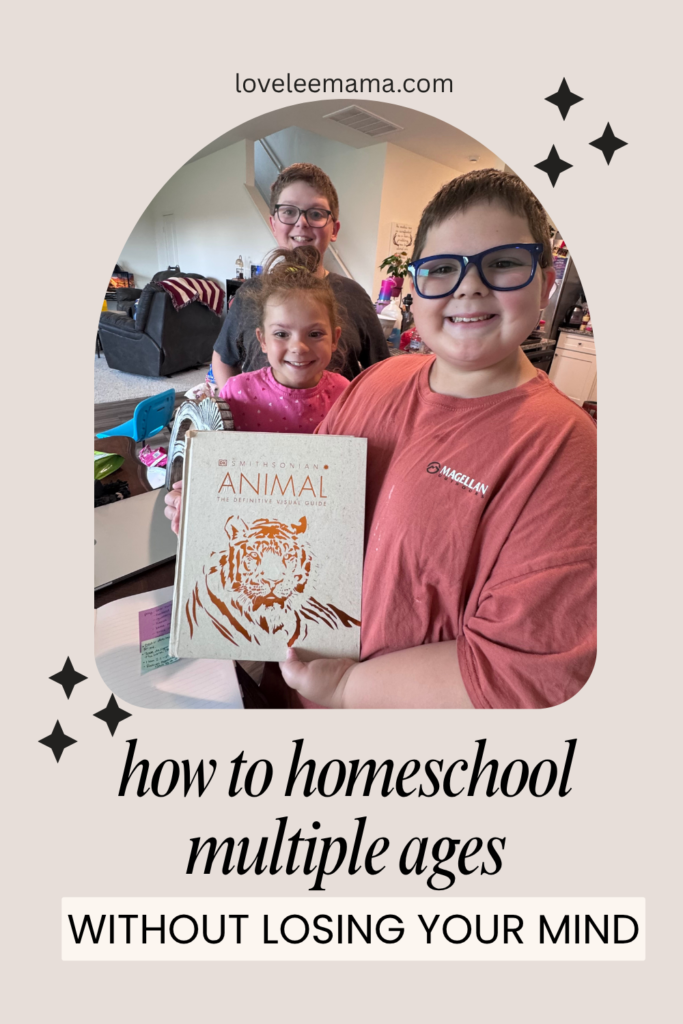




“How do I homeschool multiple ages of kids without feeling pulled in a million directions?”
This is one of the biggest questions I hear from homeschool moms (and one I’ve asked myself many times).
When you have children in different grade levels, it can feel overwhelming trying to figure out how to fit in every lesson, every subject, and every child’s needs.
Homeschooling multiple ages can feel exhausting, especially when you’re trying to balance life with the everyday responsibilities of motherhood. As a homeschool mom teaching multiple children, 3 feral and opinionated children, I know the feeling of wondering how to give each child the attention they need without spending the entire day jumping from one lesson to the next.
The answer is: you WILL feel pulled in multiple directions from time to time. However, it doesn’t have to always be this way.
The good news is that homeschooling multiple children does not have to look like recreating a traditional classroom at home. Over time, I’ve learned that having a simple homeschool routine, encouraging independent work, and finding ways to teach together can make a huge difference in creating a peaceful rhythm for your homeschool days.
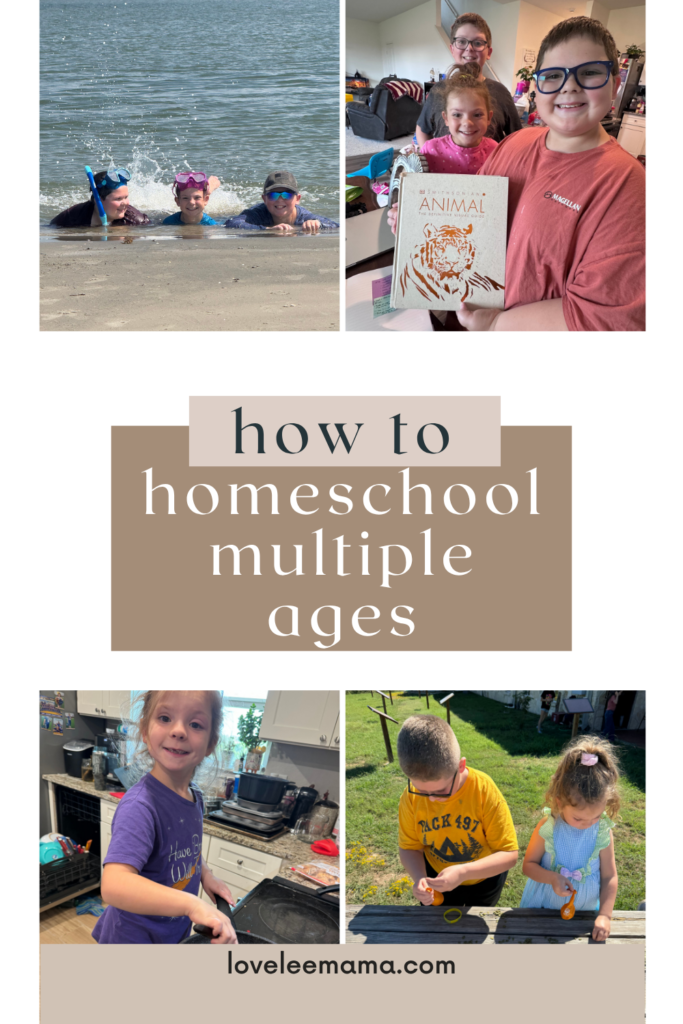
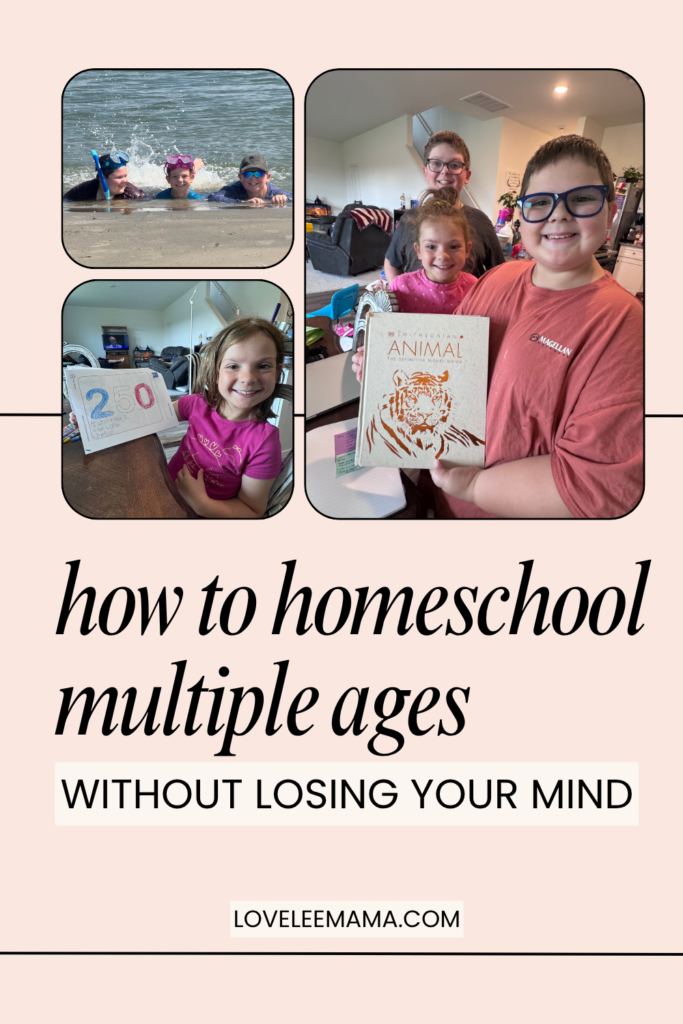
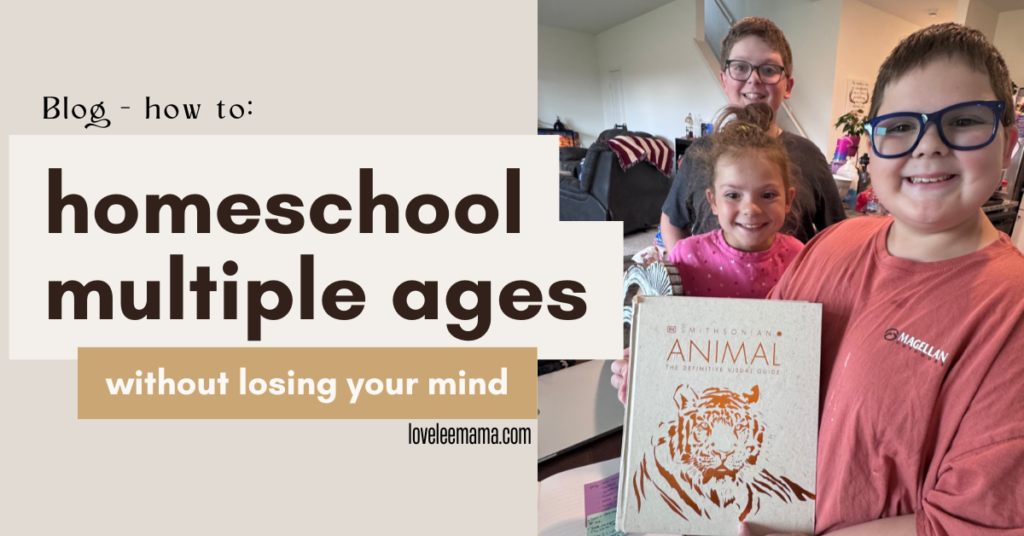
If you’re struggling with how to homeschool multiple ages without losing your mind, these are some of the strategies that have helped our family make our days run more smoothly.
But over the years, I’ve learned something important:
Stop trying to recreate a traditional classroom at home.
Homeschooling multiple ages works best when you create a rhythm that allows your children to learn together, work independently, and support one another.
Here are a few things that have helped our homeschool days run more smoothly.
Find Independent Work for Each Child
One of the biggest things that has helped us is having independent work available for each child.
When one child is working with me one-on-one, the other children need meaningful things they can work on independently, without interrupting every 10 seconds.
This might look like:
- Reading
- Math practice
- Handwriting
- Independent projects
- Reviewing previous lessons
- Independent play
- Educational activities
- Video lessons on YouTube or Miacademy
- or *gasp* even their favorite movie or tv series (somedays it’s like this)
The goal is not to keep everyone perfectly busy every minute. The goal is to create space where I can focus on one child without everyone else needing me at the same time.
Teach Together Whenever You Can
One of the biggest mindset shifts in homeschooling multiple ages is realizing that everyone does not need a separate lesson for everything.
Some subjects are beautiful to learn together.
We often do things like:
- Bible lessons
- History
- Science
- Read-alouds
- Family discussions
Even if my children are learning at different levels, they can still be part of the same conversation.
The younger kids often understand more than we give them credit for, and the older kids benefit from reviewing foundational ideas.
Let Younger Kids Learn Alongside Older Kids
One thing I love about homeschooling is that learning doesn’t have to happen in isolated boxes.
Sometimes the younger kids sit in on the older kids’ lessons.
They may not understand everything, but they are absorbing language, ideas, and concepts.
And sometimes those moments create the best conversations.
Let Older Kids Help Younger Kids
Another beautiful part of homeschooling multiple ages is the opportunity for siblings to learn from each other.
When I am working with one child, an older sibling may help a younger sibling with a task or explain something they already understand.
This doesn’t replace my role as their teacher, but it creates a culture of teamwork and encouragement in our home.
This is a huge help when trying to homeschool multiple ages of kids day after day!
Review Together
Another simple thing that helps everyone stay connected is reviewing lessons together.
Most mornings we do a review of what we’ve recently learned about. I guide and ask questions and all of the kids end up knowing the answers and saying them out loud.
We might talk about:
- What did you learn yesterday?
- What was your favorite part of this week?
- Can you teach someone else what you learned?
This allows everyone to hear what their siblings are working on and gives us opportunities for discussion.
They younger kids are learning what the big kids are learning, by just being around them.
Give Yourself Grace
The biggest lesson I’ve learned homeschooling multiple children is that it will not always look like a perfectly organized classroom.
There will be interruptions.
There will be days where things take longer than expected.
There will be moments where you wonder how you are supposed to teach everyone.
There are moments when you question everything.
But your children do not need a perfect homeschool mom.
They need a present mom who is willing to learn alongside them.
The beauty of homeschooling multiple ages is that your children are not just learning academics — they are learning patience, responsibility, teamwork, and how to care for one another.
Stay tuned for more homeschooling stories and resources as we continue our journey in home education!
If you’re feeling overwhelmed trying to organize your homeschool week, I created a free Weekly Overview Planning Page to help you see your lessons, priorities, meals, and appointments all in one place.
*coming soon* you’ll be able to Download your free Weekly Overview Planning Page
Remember, homeschooling is not about doing more. It’s about creating a rhythm that works for your family and allowing room for the moments that matter most. You CAN homeschool multiple ages of kids without losing your mind.
Blessings,
🤍 Amber